Evaluating the Helping Little Minds Grow School Design for Educational Projects
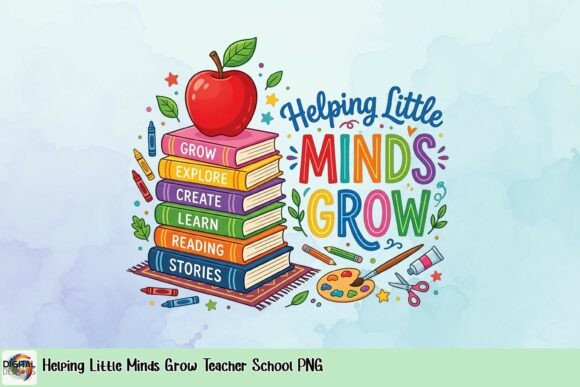
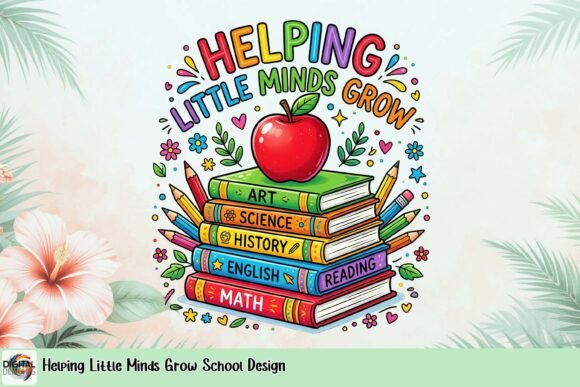
In the realm of educational branding and classroom decoration, visual elements play a pivotal role in setting the tone for learning environments. One design that has gained traction among educators, parents, and small business owners is the Helping Little Minds Grow School Design. This vibrant graphic features a colorful stack of books topped with a red apple, surrounded by floral elements, leaves, and pencils, with the phrase "HELPING LITTLE MINDS GROW" rendered in bold, playful typography. While it appears to be a simple aesthetic choice, understanding its practical applications, technical specifications, and suitability for various use cases is essential for making an informed purchasing or usage decision.
Understanding the Design Composition
The core appeal of this design lies in its immediate recognition of traditional educational symbols. The combination of stacked books and a classic red apple serves as a universal shorthand for academic dedication and teacher appreciation. However, the inclusion of flowers, leaves, and colored pencils adds a layer of organic warmth and creativity that distinguishes it from more sterile or corporate-looking educational graphics. The typography, described as bold and playful, reinforces the target demographic: young children and the adults who support them.
From a technical standpoint, the availability of this asset in PNG format is a significant factor in its utility. Unlike JPEG files, PNGs support transparency, allowing the design to be overlaid onto various backgrounds without unsightly white boxes. This feature is particularly valuable for digital marketing materials and product mockups where seamless integration is required.
Primary Use Cases and Applications
When evaluating whether this design fits your needs, it is helpful to categorize potential applications into three main areas: physical merchandise, digital media, and direct classroom use.
Merchandise and Print-on-Demand Products
One of the most common reasons individuals seek out specific school-themed designs is for creating tangible products. This graphic is frequently utilized on:
- Apparel: T-shirts and hoodies for teachers, especially during Back-to-School season or Teacher Appreciation Week.
- Drinkware: Mugs and water bottles, which are popular gifts for educators.
- Accessories: Stickers, tote bags, and pins that can be used for organization or personal expression.
For entrepreneurs running print-on-demand stores, this design offers a ready-made solution that resonates with a broad audience. The colorful and playful style ensures that the products are appealing not just to the end-user (the child) but also to the purchaser (the parent or grandparent).
Digital Marketing and Social Media
Beyond physical goods, the design serves as an effective tool for communication. Educators and schools often need consistent branding for their social media posts, newsletters, and flyers. The high-contrast colors and clear text make the image legible even at smaller sizes, such as mobile screens. It can be used to announce new curriculum updates, celebrate student achievements, or simply share motivational quotes related to early childhood development.
Classroom Decorations and Materials
Direct application in the classroom includes printing the design on posters, bulletin board headers, or labels for storage bins. The theme of growth ("Growing Little Minds") aligns well with developmental milestones and progress tracking charts. For parents creating home-learning stations, similar decor can help establish a dedicated space for study and creativity.
Evaluating Benefits and Tradeoffs
While the Helping Little Minds Grow School Design offers numerous advantages, it is important to consider both its strengths and limitations before integrating it into a project.
Benefits
Versatility: The design’s neutral yet cheerful aesthetic allows it to fit into a wide range of contexts, from formal school brochures to casual gift tags. Its adaptability reduces the need for multiple custom designs.
Emotional Resonance: The imagery taps into positive associations with education, nurturing, and care. This emotional connection can enhance engagement, whether a viewer is looking at a t-shirt or reading a school newsletter.
Ease of Customization: Because the file is in PNG format and features distinct elements, users can easily edit components if they have access to graphic design software. Text color, background removal, or scaling can be adjusted to meet specific brand guidelines.
Tradeoffs and Considerations
Generic Aesthetic: The use of standard symbols like apples and books means the design may lack uniqueness compared to bespoke illustrations. In highly competitive markets, this generic nature might make it harder to stand out unless paired with strong branding elsewhere.
Resolution Limitations: If the source PNG is low-resolution, enlarging the design for large-format prints (such as banners or wall murals) may result in pixelation. Users must verify the DPI (dots per inch) of the file before committing to large-scale production.
Licensing Restrictions: Depending on the source, the design may come with specific licensing terms. Some licenses prohibit resale on certain platforms or limit the number of items produced. It is crucial to review these terms to avoid legal issues, especially for commercial ventures.
Situational Fit: When to Choose This Design
This design is a strong fit for the following scenarios:
- Back-to-School Campaigns: Its timely relevance makes it ideal for August and September promotions.
- Teacher Gifts: It strikes a balance between professional appreciation and playful sentiment.
- Early Childhood Education Centers: The bright colors and simple shapes are developmentally appropriate for preschool and kindergarten settings.
- Quick Turnaround Projects: For users who need a polished look quickly without the budget or time for custom illustration.
When to Consider Alternatives
There are situations where this design may not be the optimal choice:
- Highly Specialized Audiences: If targeting older students (middle or high school), the playful font and childish imagery may feel patronizing. In such cases, a more minimalist or sophisticated design would be preferable.
- Brand Differentiation Needs: If the goal is to create a unique, ownable brand identity, relying on a stock-style graphic might dilute distinctiveness. Custom illustrations or unique typography would offer better long-term value.
- Monochrome or Limited Color Constraints: The design relies heavily on a multi-color palette. If printing costs are driven by color count (e.g., screen printing), a simplified version might be necessary, or a different monochrome design might be more cost-effective.
Practical Decision-Making Insights
To determine if the Helping Little Minds Grow School Design aligns with your goals, consider the following checklist:
- Define Your Audience: Are you speaking directly to young children or their caregivers? If so, the playful style is appropriate.
- Check Technical Specs: Ensure the PNG resolution is sufficient for your intended print size. Look for files that are at least 300 DPI for high-quality printing.
- Review Licensing: Confirm whether the license allows for commercial use if you plan to sell products featuring the design.
- Assess Brand Consistency: Does the color palette match your existing school or business branding? If not, can the colors be easily altered?
Ultimately, the Helping Little Minds Grow School Design is a functional and aesthetically pleasing asset for those involved in early education. Its strength lies in its clarity and emotional appeal. By carefully evaluating its technical requirements and licensing terms against your specific project needs, you can leverage this design effectively to inspire and engage young minds.