Evaluating Faux Embroidery Style Kindergarten PNG for Apparel and Print Design
In the competitive landscape of digital design assets, particularly those targeting the educational and back-to-school markets, visual texture plays a pivotal role in perceived value. Among the various formats available to designers and small business owners, the Faux Embroidery Style Kindergarten PNG has emerged as a distinct category that bridges the gap between flat vector graphics and high-end textile printing. This specific type of asset is not merely an image; it is a sophisticated rendering technique designed to mimic the tactile depth of machine-stitched thread on fabric, offering a premium aesthetic without the logistical constraints of actual digitization.
For professionals in the apparel industry, teacher gift boutiques, and preschool marketing sectors, understanding the nuances of this format is essential for making informed production decisions. The following analysis explores the characteristics, applications, and comparative advantages of using faux embroidery designs, with a specific focus on the "Teaching Tiny Humans To Do Big Things" composition, to help readers determine if this style aligns with their creative and commercial goals.
The Mechanics of Faux Embroidery in Digital Assets
To understand why a Faux Embroidery Style Kindergarten PNG stands out, one must first distinguish it from standard raster or vector files. Traditional PNGs are often flat, relying solely on color blocks to define shapes. In contrast, a high-fidelity faux embroidery file utilizes complex shading, shadowing, and highlight algorithms to simulate the way light interacts with raised thread. This creates an illusion of three-dimensionality on a two-dimensional screen, which translates effectively when printed on textiles.
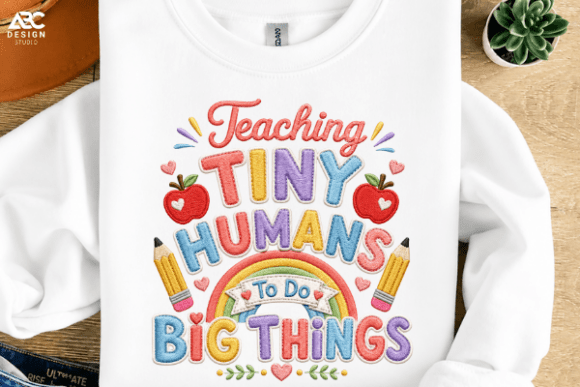
The standout feature of premium files in this category is the meticulous attention to detail across every element. For instance, the "Teaching Tiny Humans To Do Big Things" design exemplifies this engineering. It does not rely on a single font style but rather employs a multi-tiered typographic arrangement. The word "Teaching" is rendered in a coral-pink script font, suggesting warmth and approachability, while "TINY HUMANS" and "BIG THINGS" utilize oversized block lettering. This contrast is enhanced by delicate white faux-applique borders, which add another layer of simulated texture. The result is a graphic that feels substantial and durable, qualities highly prized in children’s apparel where garments undergo frequent washing and wear.
Visual Composition and Color Strategy
The effectiveness of any design asset depends heavily on its color palette and compositional balance. The aforementioned design leverages an eclectic mix of muted primary and pastel colors. This choice is strategic; it appeals to modern sensibilities that favor soft, gender-neutral aesthetics over the harsh, saturated primaries of previous decades. The inclusion of classic hand-drawn schoolhouse elements—such as two fresh red apples with heart-shaped cutouts, angled yellow pencils, a pastel rainbow, floating miniature hearts, and a "To Do" script ribbon banner—creates a joyful, cohesive narrative.
These elements are not just decorative; they serve to anchor the text within a recognizable context. When these components are rendered in the same high-fidelity embroidery stitch style, the entire composition reads as a unified piece of art rather than a collage of disparate images. This unity is crucial for maintaining visual integrity, especially when the design is scaled up or down for different garment sizes.
Comparative Analysis: Faux Embroidery vs. Alternatives
When selecting a design format for production, creators often weigh several options. Understanding how the Faux Embroidery Style Kindergarten PNG compares to alternatives like direct-to-garment (DTG) prints, vinyl decals, or traditional screen printing can clarify its best-fit scenarios.
Texture and Perception of Quality
Compared to Flat DTG Prints: While DTG printing offers unlimited color complexity and fine detail, it often lacks the tactile presence of embroidery. A flat print can sometimes appear cheap or temporary, whereas a faux embroidery PNG suggests longevity and care. For teacher appreciation gifts, where sentimentality is key, the "embroidered" look conveys a higher level of effort and prestige. However, it is important to note that this is a *visual* simulation. If the final product is a sublimated shirt, the texture remains visual. If the design is used as a guide for actual machine embroidery, the PNG serves as a mockup to visualize the end result before costly digitizing begins.
Versatility in Production Methods
Compared to Vinyl Decals: Heat-transfer vinyl (HTV) provides real texture and durability. However, vinyl is limited in color gradients and intricate details. A Faux Embroidery Style Kindergarten PNG captures details—like the subtle shading on the apple or the curve of the script—that would be difficult or impossible to replicate with layered vinyl. Furthermore, vinyl can feel heavy and plasticky on lightweight fabrics, whereas the visual lightness of a faux embroidery design works well on breathable materials like cotton blends.
Cost and Speed Efficiency
Compared to Actual Digitized Embroidery: True machine embroidery requires time-consuming digitization processes, specialized hardware, and skilled operators. For small batch runs or quick-turnaround orders, this can be prohibitive. Using a high-quality PNG allows businesses to offer the *look* of embroidery via print-on-demand services or heat transfers without the upfront investment. It democratizes access to high-end aesthetics for smaller boutique owners who may not have embroidery machines on-site.
Optimization for Garment Selection
The success of a Faux Embroidery Style Kindergarten PNG is heavily dependent on the substrate it is applied to. The design’s visual punch is optimized for light garment blanks. Specifically, it performs exceptionally well against white, cream, sand, oatmeal, heather grey, and light pastel crewnecks. These neutral backgrounds allow the muted pastels and coral accents to pop without clashing, ensuring the intricate details of the faux stitches remain visible.
Conversely, applying this design to dark-colored garments may diminish its impact unless the underlying print method includes a white underbase. Even then, the contrast might reduce the subtlety of the faux-applique borders. Therefore, when evaluating this asset, buyers should consider their inventory strategy. If their boutique specializes in bright, bold tees, this pastel-heavy design might not resonate. But for the growing market of "quiet luxury" or minimalist educator fashion, it is an ideal match.
Decision Factors and Best-Fit Scenarios
Choosing the right design asset involves balancing aesthetic desires with practical constraints. Here are key factors to consider when integrating a Faux Embroidery Style Kindergarten PNG into your workflow:
- Target Audience: Is your customer base looking for trendy, Instagram-worthy visuals? The faux embroidery trend is highly shareable and fits well within current social media aesthetics focused on cozy, curated lifestyles.
- Production Capability: Do you have access to printers that support high-resolution textures? Ensure your print provider can reproduce the fine details of the "stitch" effects without blurring or pixelation.
- Seasonal Relevance: This design is explicitly engineered for seasonal demand spikes, particularly back-to-school and Teacher Appreciation Week. Timing your launch to coincide with these periods maximizes visibility and sales potential.
- Brand Safety: Many designers worry about trademark infringement. Premium faux embroidery files, such as the one described, are typically free of restricted brand keywords and logos, allowing for safe commercial use without legal risk.
When to Choose This Option
This asset is the right choice when you need to convey warmth, professionalism, and high quality without the lead times associated with custom digitization. It is particularly effective for:
- Teacher Apparel: Educators often seek clothing that expresses their identity softly. The phrase "Teaching Tiny Humans To Do Big Things" resonates emotionally, and the embroidered look adds a touch of elegance suitable for professional environments.
- Preschool Merchandise: Schools and daycare centers often sell branded gear to parents. The playful yet polished design appeals to both children (through the icons) and adults (through the typography).
- Digital Mockups: Even if you do not print directly on the PNG, it serves as an excellent mockup tool to showcase how a design will look in a realistic setting, helping you sell the concept to clients or customers before production.
Limitations to Consider
While versatile, this format has limitations. It cannot replace the actual tactile experience of real embroidery if that is your brand’s unique selling proposition. Additionally, if the print resolution is low, the "fuzzy" edges intended to mimic thread ends can appear muddy rather than textured. Always verify the DPI (dots per inch) of the file to ensure crisp reproduction on your chosen material.
Conclusion
The Faux Embroidery Style Kindergarten PNG represents a smart intersection of technology and tradition in digital design. By simulating the richness of threadwork through advanced graphical techniques, it offers designers and retailers a powerful tool to elevate their products. Whether you are creating apparel for the bustling back-to-school season or crafting thoughtful gifts for educators, this format provides the visual weight and emotional resonance needed to stand out in a crowded market. By carefully considering garment selection, production methods, and target audience preferences, you can leverage this asset to deliver a product that feels both timeless and contemporary.